
Australia and Japan are among the closest economic partners in the Asia-Pacific. Japan is consistently one of Australia’s top three export destinations, and the trade relationship stretches across almost every sector – energy, agriculture, manufacturing, and consumer goods. Whether you are exporting beef, wine, seafood, machinery, or raw materials, understanding how shipping from Australia to Japan works is essential to running a cost-effective and compliant supply chain.
Shipping from Australia to Japan – Sea Freight or Air Freight?
Two options dominate this trade lane: sea freight and air freight. The choice comes down to the nature of your cargo, your delivery timeline, and your budget.
💡 Quick tip: Sea freight is the standard for bulk commodities, industrial goods, and large commercial shipments. Air freight suits urgent, high-value, or perishable shipments where speed justifies the premium cost.
Sea freight from Australia to Japan
The Australia–Japan sea freight lane is one of the most mature and well-serviced trade routes in the Asia-Pacific. Regular departure schedules, strong carrier competition, and relatively short ocean distances keep this route efficient and competitively priced. Japan consistently ranks among the world’s top import nations, and its ports are among the most operationally efficient anywhere.
Transit time by sea
Transit times vary depending on the Australian port of origin and the Japanese destination port. As a general guide:
- Eastern Australia (Melbourne, Sydney, Brisbane) to Yokohama or Tokyo: approximately 10 to 15 days
- Eastern Australia to Osaka/Kobe: approximately 12 to 17 days
- Fremantle (Perth) to Yokohama or Osaka: approximately 12 to 18 days
These are port-to-port estimates. Door-to-door transit, including origin haulage, port handling, and Japanese customs clearance, will typically add 3 to 5 additional business days.
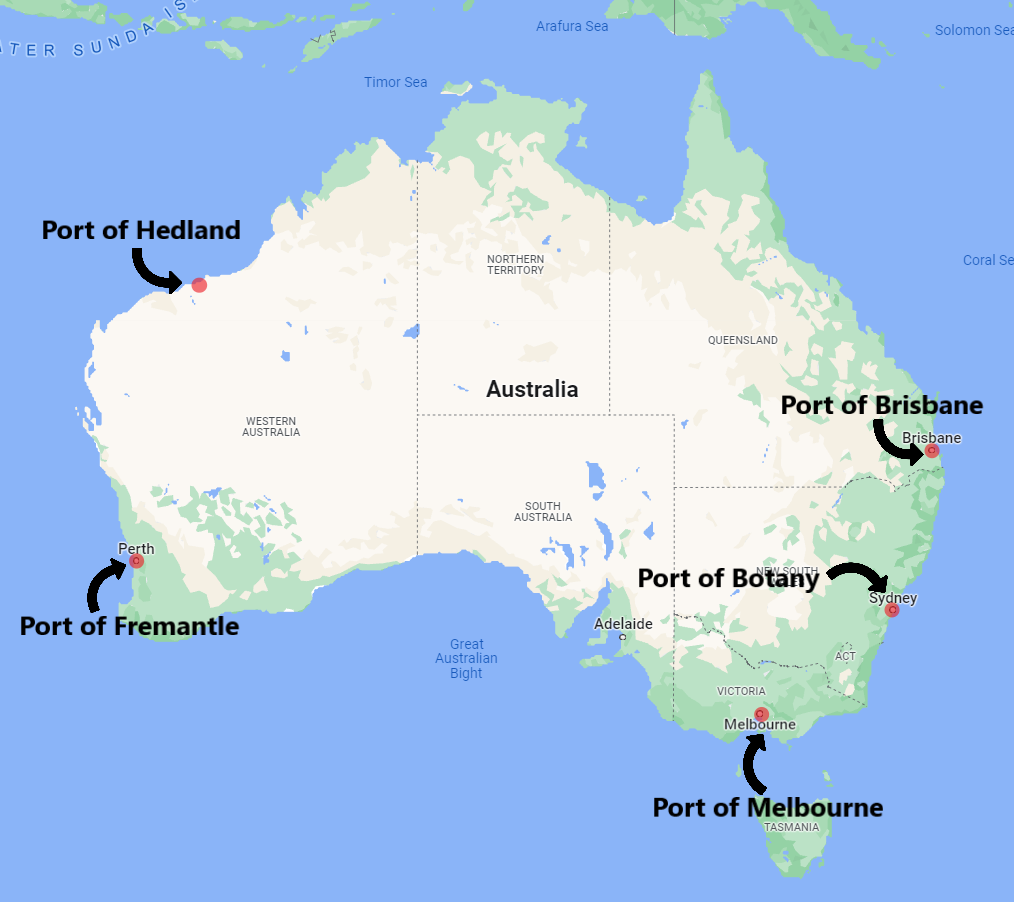
Main seaports in Australia
- Port of Melbourne
- Port of Botany (Sydney)
- Port of Brisbane
- Port of Fremantle (Perth)
- Port of Port Hedland
- Port of Adelaide
Main seaports in Japan
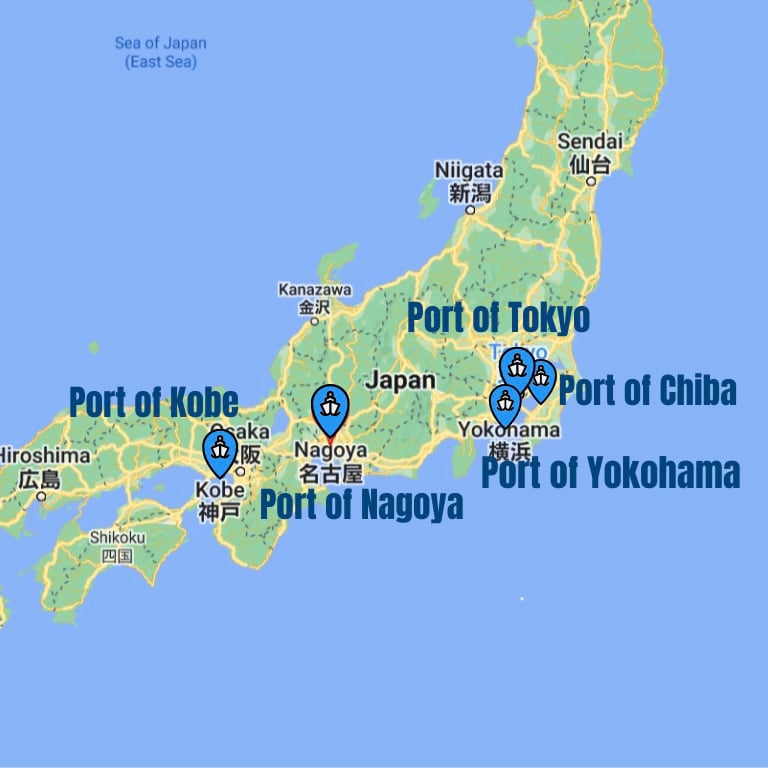
- Port of Nagoya
- Port of Yokohama
- Port of Tokyo
- Port of Kobe
- Port of Hakata (Fukuoka)
⚠️ Important note: Japan's ports are among the most efficient in the world, but customs clearance speed depends almost entirely on documentation accuracy. Japan Customs operates a zero-tolerance policy on misdescribed or undervalued goods. Any discrepancy between the commercial invoice and the actual cargo can trigger a full inspection, detention, and potential penalties. Getting the paperwork right before departure is not optional – it is the most important thing you can do.
Air freight from Australia to Japan
Japan is a major market for Australian premium food exports – chilled beef, lobster, abalone, fresh fruit, and high-grade dairy – and air freight is the primary mode for getting these products to Japanese restaurants, hotels, and supermarkets in peak condition.
Transit time by air
Air freight between Australia and Japan is fast, frequent, and well-served. The flight time from Sydney or Melbourne to Tokyo is approximately 9 to 10 hours, with multiple daily direct and one-stop services operated by major cargo carriers. Door-to-door air freight transit, including Japanese customs clearance, typically takes 2 to 4 business days.
Main cargo airports in Australia
- Sydney Kingsford Smith Airport
- Melbourne Airport (Tullamarine)
- Brisbane Airport
- Perth Airport

Main cargo airports in Japan
- Narita International Airport (NRT)
- Kansai International Airport (KIX)
- Chubu Centrair International Airport (NGO)

How much does shipping from Australia to Japan cost?
Freight rates change based on carrier capacity, fuel costs, seasonal demand, and market conditions. As a general reference:
- LCL sea freight from Australian east coast ports to Yokohama or Nagoya: from approximately $60–$110 per CBM, plus origin and destination handling charges.
- FCL sea freight (20-foot container) from Melbourne or Sydney to Yokohama: from approximately $700–$1,800, depending on carrier and season.
- Air freight from Sydney or Melbourne to Narita: from approximately $3–$6 per kilogram, plus fuel surcharge, security fees, and handling charges.
- For bulk and project cargo – iron ore, LNG, grain, and vehicles – pricing structures differ significantly from containerised freight and are typically negotiated directly with carriers or specialised bulk freight brokers.
Summary: Shipping from Australia to Japan at a Glance
| Sea freight | Air freight | |
|---|---|---|
| Transit time | 10–18 days | 2–4 business days |
| Best for | Bulk, commercial, industrial cargo | Perishables, urgent, high-value |
| Cost | Lower | Higher |
| Main port (AU) | Melbourne / Botany / Brisbane | Sydney / Melbourne |
| Main port (JP) | Nagoya / Yokohama / Kobe | Narita (NRT) / Kansai (KIX) |

Ship from Australia to Japan now
Japan is a demanding but highly rewarding market, and with the right freight partner, this route is well within reach for Australian exporters of any size. Don’t wait; request your quotes, compare your options, and move forward with a forwarder who knows Japan. Request a free shipping quote on ShipHub today!