South Korea is consistently one of Australia’s top ten import sources, supplying a wide range of goods from passenger vehicles, electronics, and steel to cosmetics, processed foods, and industrial machinery. The Korea-Australia Free Trade Agreement (KAFTA) has made this trade lane even more compelling by progressively reducing tariffs and improving market access in both directions. If you want to understand how shipping from South Korea to Australia works, you need to read this guide.
Shipping from South Korea to Australia — sea freight or air freight?
Two modes of transport serve this route: sea freight and air freight. Your choice will depend on your cargo type, delivery deadline, and budget.
💡 Quick tip: Air freight is the right call for urgent orders, high-value electronics, perishables, and pharmaceutical products where speed matters more than cost. Sea freight is the standard for most commercial, industrial, and bulk shipments.
Sea freight from South Korea to Australia
The South Korea–Australia sea freight lane is among the most well-established in the Asia-Pacific region. South Korea is home to some of the world’s most efficient container ports, and Australian ports on the east and west coasts offer regular direct and transshipment services on this lane. Strong carrier competition from lines including Maersk, CMA CGM, MSC, HMM (Hyundai Merchant Marine) and Evergreen keeps capacity and pricing competitive.
How long does sea shipping from South Korea to Australia take?
Transit times vary depending on the Korean port of origin and the Australian destination port. As a general guide:
- Busan to Brisbane: approximately 11 to 16 days
- Busan to Melbourne or Sydney: approximately 12 to 18 days
- Busan to Fremantle (Perth): approximately 13 to 19 days
- Incheon or Gwangyang to Australian east coast: approximately 14 to 20 days
These are port-to-port estimates. Door-to-door delivery, including origin trucking, port handling, and Australian customs clearance, typically adds up to 5 additional business days.
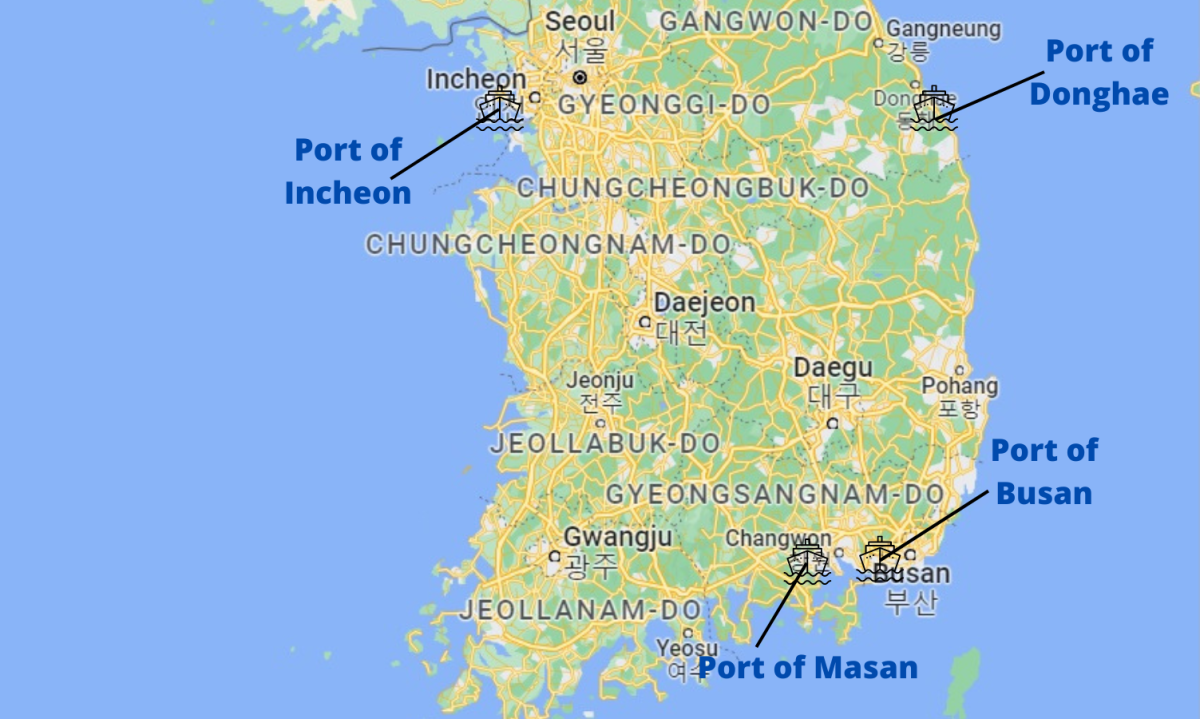
Main seaports in South Korea
- Port of Busan is South Korea’s largest seaport and one of the busiest container ports in the world, handling over 22 million TEUs annually.
- Port of Incheon is located near Seoul and serves as a key cargo hub for goods produced in the capital region and the country’s northwest.
- Port of Gwangyang is South Korea’s second-largest container port and an important industrial gateway, particularly for steel products, chemicals, and heavy industrial exports.
Main seaports in Australia
- Port of Melbourne is Australia’s busiest container port, processing over 3 million TEUs per year.
- Port of Botany (Sydney) is Australia’s second-largest container port and the main import gateway for New South Wales.
- Port of Brisbane is the main container port for Queensland and handles significant volumes of Korean-origin cargo, particularly vehicles, steel products, and industrial machinery.
- Port of Fremantle (Perth) is the gateway to Western Australia and a key arrival point for Korean exports into the resources and mining sector.
- Port of Adelaide serves South Australia and processes Korean imports including vehicles, electronics, and manufactured goods for the South Australian market.

Air freight from South Korea to Australia
Incheon International Airport is one of the world’s great cargo hubs, and Australia’s major airports are well-connected to it. Air freight between South Korea and Australia is fast, reliable, and handled by a strong roster of carriers including Korean Air Cargo, Asiana Cargo, Qantas Freight, and several international express operators.
How long does air freight from South Korea to Australia take?
The flight time from Seoul Incheon to Sydney is approximately 10 to 11 hours, and door-to-door air freight transit (including Australian customs clearance) typically takes 2 to 4 business days.
Main cargo airports in South Korea
- Incheon International Airport (ICN) is South Korea’s primary international cargo hub and one of the top five busiest air cargo airports in the world.
- Gimpo International Airport primarily handles domestic routes but serves as a secondary point for some charter and regional cargo movements in the Seoul metropolitan area.

Main cargo airports in Australia
- Sydney Kingsford Smith Airport is Australia’s largest air cargo gateway, processing over 600,000 tonnes per year. It is the primary arrival point for air freight from South Korea and is well-equipped for perishables, pharmaceuticals, and express courier shipments.
- Melbourne Airport (Tullamarine) is Australia’s second-largest air cargo hub and an important arrival point for Korean electronics, automotive parts, and temperature-controlled goods.
- Perth Airport is growing as a cargo gateway for Western Australia, with services connecting to Korean carriers via hub airports for importers supplying WA’s mining and industrial sector.
- Brisbane Airport serves Queensland with direct and connecting services from Incheon and is particularly relevant for Korean exporters supplying the Queensland resources and agricultural sectors.

How much does shipping from South Korea to Australia cost?
Freight rates fluctuate based on carrier capacity, seasonal demand, fuel costs, and port conditions. The South Korea–Australia lane is well-contested, and rates vary between freight forwarders based on their carrier contracts and volume commitments. The fastest way to find the right price is to compare several quotes at once.
💡 Tip: Don't spend hours calling forwarders one by one. A freight platform lets you submit one request and receive multiple competitive quotes from verified providers — saving time and ensuring you're not leaving money on the table.
Get your free freight quote on ShipHub →
Summary: Shipping from South Korea to Australia at a glance
| Sea Freight | Air Freight | |
|---|---|---|
| Transit time | 12–20 days | 2–4 business days |
| Best for | Vehicles, steel, machinery, bulk | Electronics, perishables, urgent |
| Cost | Lower | Higher |
| Main port (KR) | Busan, Incheon, Gwangyang | Incheon (ICN) |
| Main port (AU) | Melbourne, Botany, Brisbane | Sydney, Melbourne |

Ready to Ship from South Korea to Australia?
ShipHub connects importers and exporters with vetted freight forwarders. Submit one request, receive multiple competitive quotes, and choose the partner that fits your cargo, timeline, and budget. Request a free shipping quote on ShipHub today →